
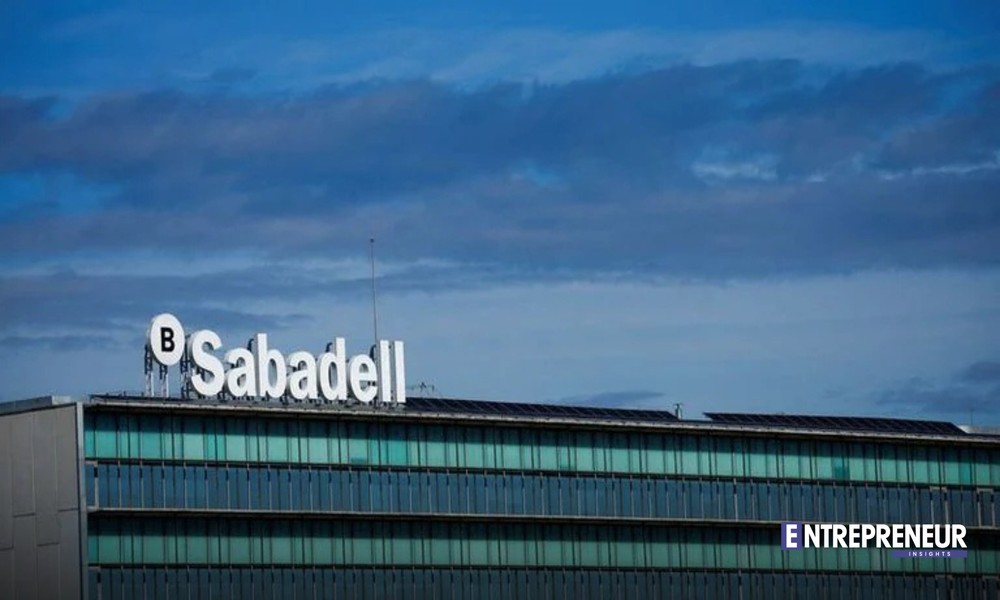
Spanish lender Banco Sabadell has adopted a more cautious outlook for its lending income as the cost of customer deposits continues to increase. Although the bank reported stronger underlying profits for the third quarter of 2026, higher funding expenses have created challenges for its income growth expectations. The development highlights how banks must balance loan earnings with the interest they pay to customers to maintain deposits.
Sabadell Adjusts Its Financial Outlook for 2026
Sabadell expects its net interest income to increase by approximately 1% in 2026, a more cautious forecast than its earlier guidance of growth above that level. Net interest income is an important measure of banking performance because it reflects the difference between interest earned on loans and interest paid on deposits and other funding.
The revised projection reflects pressure from rising deposit expenses. Banks may need to offer more attractive savings rates to retain customers, particularly when depositors have more opportunities to move their money in search of better returns.
For Sabadell, managing these expenses will be important as it works to maintain its lending margins and meet its annual financial objectives.
Quarterly Earnings Show Underlying Business Strength
Despite the more cautious outlook, Sabadell reported underlying net profit of €405 million for the third quarter. This was an 18% increase compared with the same period a year earlier on a comparable basis excluding its former British subsidiary, TSB.
The result was higher than the average analyst forecast of €375 million, indicating that the bank’s underlying operations performed better than expected.
However, the figures also require context. Sabadell sold TSB in May 2026, so comparisons with periods when the British business was included can produce different results. On a reported basis that included TSB in the previous year’s comparison, quarterly net profit declined by 2%.
The results suggest that the bank continues to generate earnings from its core operations, even as its financial outlook becomes more cautious.
Deposit Expenses Put Pressure on Lending Income
Net interest income reached €920 million during the third quarter, rising 2% year-on-year on a comparable basis. The figure was slightly below the average analyst estimate of €923 million.
One factor affecting the outlook is the cost of deposits. As banks compete for customer savings, they may have to pay higher interest rates, increasing the cost of their funding.
This can reduce the benefit of earning interest from loans, especially when lending rates do not rise as quickly as deposit rates. Sabadell’s ability to manage this difference will remain important to its financial performance over the coming quarters.
The bank expects lending income to improve at a mid-single-digit rate year-on-year in the fourth quarter and anticipates some improvement in customer margins towards the end of 2026.
Profitability Targets Remain in Place
Sabadell has maintained its return-on-tangible-equity targets of 14.5% for 2026 and 16% for 2027. These targets indicate that the bank continues to focus on profitability despite pressure on lending income.
Maintaining these objectives will require careful management of funding expenses, operating costs and lending activity. The bank will also need to respond to changes in customer behaviour and the wider interest-rate environment.
What Comes Next for Sabadell?
Sabadell’s latest results show both progress and challenges. Stronger underlying quarterly profits provide support for its business performance, while rising deposit costs have encouraged a more conservative view of lending-income growth.
Investors and banking-sector observers will watch the bank’s fourth-quarter results for signs that customer margins are improving and funding pressures are easing. Its ability to control deposit expenses while maintaining lending activity will be central to achieving its financial targets in 2026 and beyond.
The Entrepreneur Insights Discovering Visionary Leaders, Celebrating Bold Entrepreneurs, and Exploring New Business Possibilities.












Leave a comment