
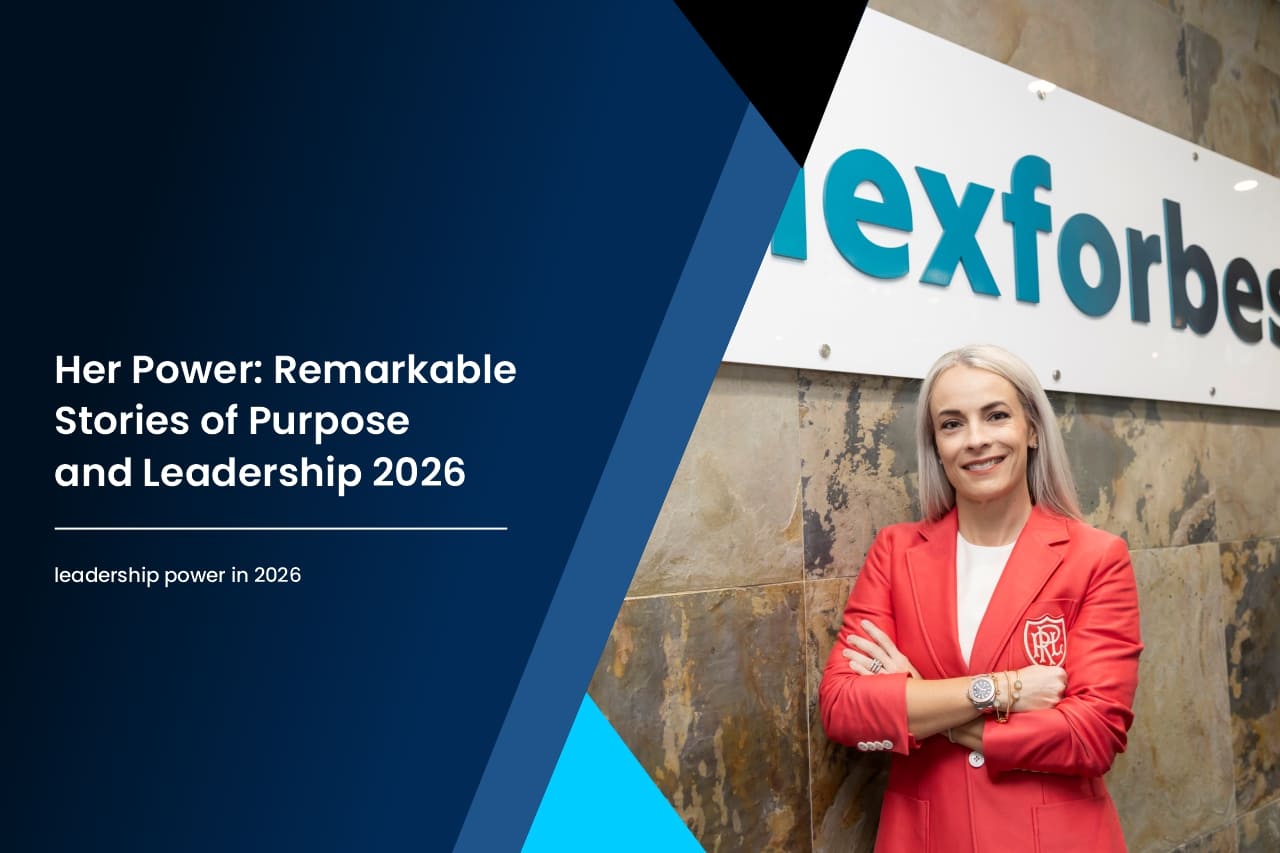
Carina Wessels, can you share the defining moments that shaped your leadership journey and brought you to where you are today?
Over nearly three decades, my career has been marked by numerous significant experiences. However, a few golden threads consistently stand out:
- Proactively seeking growth outside my main role: I made a point of embracing opportunities beyond my day-to-day job, such as serving as an audit committee member and non-executive director outside of my employer. I generally said yes to every opportunity, even when this meant personal sacrifice, like spending six months apart from my husband to pursue a career move. While this often resulted in long working hours and required me to make considerable personal sacrifices, it undeniably accelerated my growth and development.
- Embracing discomfort for true growth: I learned that personal and professional growth happens outside your comfort zone and the discomfort can be intense. Growth rarely feels comfortable in the moment, but the key is to honestly assess when discomfort is serving your development versus when it crosses the line into toxicity. Recognising that distinction and knowing when it’s time to move on is essential.
- Leading with empathy and authenticity: My journey helped me realise that everyone faces challenges beyond the “social media profile of life.” This awareness led me to become a more empathetic leader, open about my own fears, setbacks and vulnerabilities. Navigating difficult personal circumstances fundamentally changed my understanding of what true strength looks like and allowed me to foster more authentic environments.
While my commitment to excellence and execution remains as strong as it was early in my career, I am proud to have created spaces later on that are more genuine, places where my teams and I feel safe to be vulnerable and empowered to become the best versions of ourselves.
The theme “Her Voice Matters” centres on being heard. How have you learned to use your voice strategically to create impact, especially in spaces where women are underrepresented?
Early on, I realised that projecting confidence could sometimes be misinterpreted as aggression, a challenge that is intensified when addressing a predominantly male audience.
I made mistakes along the way, but a turning point came when a male colleague in my first executive position (at age 33 in the mining industry) shared candid feedback about how my email communications were perceived. He advised me to reserve a ‘serious tone’ for rare occasions where it was truly warranted. His constructive honesty allowed me to recognise and address a blind spot, and I have since made it a point to offer the same open and honest feedback to colleagues, regardless of gender, to help them grow as well.
What has been most instrumental in amplifying my voice has been building trusted relationships through consistent delivery and execution. While it may be tempting to dwell on the inequity of women having to prove themselves to be heard, I chose instead to focus on being reliable and results-driven. This approach has not only created more opportunities for me but has also allowed me to drive greater impact and empower others to find their voices too.
Women Leaders 2026 celebrates women shaping the future during America’s 250th Anniversary. What does this historic milestone mean to you as a woman leader in today’s global landscape?
Women Leaders 2026 honours the remarkable women who are actively shaping the future as America marks its 250th Anniversary. As a woman leader in today’s global landscape, this historic milestone is not only a commemoration of progress, but also a powerful invitation to reimagine what lies ahead. It urges us to move beyond reflection and boldly design a blueprint for a sustainable, inclusive future, where our collective vision guides us further than our individual memories ever could.
Despite our diverse geographies, our destinies are deeply connected. In Africa, we stand at a pivotal moment: inclusive leadership and innovation offers the potential to bridge the gender gap. Sub-Saharan Africa is home to countless resilient women who remain economically marginalised. For me, reflecting on this milestone emphasises the need to shift from aspirations, objectives and targets to tangible, real-world impact.
Ultimately, America’s 250th Anniversary is a celebration of hard-won progress. Yet, it must also serve as a renewed commitment to ensuring the next 250 years are defined by equity, dignity, and shared prosperity, not only for American women, but for women everywhere. Let us pledge to make this era a turning point for global change, where every woman’s potential is realised and valued.
How do you define leadership power in 2026, and how does your approach challenge traditional leadership models?
I define leadership power as the ability to inspire, empower and drive sustainable impact through authentic engagement and a commitment to serving others. My approach centres on servant leadership, with a clear execution bias that values not only vision and inspiration but also the discipline to deliver results.
As Picasso wisely said, “The meaning of life is to find your gift. The purpose of life is to give it away.” For those whose gift is leadership, the true measure lies in uplifting others: serving, enabling and empowering teams to realise their full potential.
This approach stands in contrast to traditional leadership models rooted in hierarchy, authority, and control. I believe these antiquated approaches, often reliant on fear or rigid power structures, does not foster innovation, excellence or resilience.
However, I also recognise that empowerment alone is insufficient. Transformative leadership must be anchored in accountability, delivery and a relentless pursuit of excellence. It is this blend of service and execution that creates organisations and societies capable of lasting, positive change.
As we reflect on 250 years of independence, what does freedom mean to you personally and professionally as a woman leader?
On a personal level, financial freedom holds profound significance, especially in a world where many women still face barriers to economic empowerment. While my husband, Sas, and I have built our lives together as equal partners, I cherish the autonomy to make independent financial decisions. Although, I must admit, my solo decisions are often limited to shopping sprees or the occasional impulsive car purchase, like the cabriolet I bought while Sas was away on business – a story he revels in telling. Beyond finances, the ability to travel freely is another cornerstone of my sense of liberation and I am incredibly grateful for a supportive husband who encourages this independence.
In my professional life, freedom is embodied in an environment where individuals choose to stay and thrive, not because they lack alternatives or fear change, but because they feel genuinely empowered. True workplace freedom means everyone shares accountability and authority, with the liberty to make impactful decisions and shape their own destinies. It’s about cultivating a culture where creativity and initiative are encouraged, and every voice is heard.
The transformation brought on by the post-COVID era and the rise of remote and hybrid work models has further shaped my view of freedom. For me, and I believe for many others, freedom now also means having greater control over one’s schedule, embracing flexibility, which goes hand in hand with empowerment and accountability.
Ultimately, whether in my personal or professional life, freedom is about having choices: choosing who I spend my time with, what I dedicate my energy to, and, importantly, having the freedom to express my opinions in an environment where they are valued and respected. It’s the ability to speak my mind openly and confidently, knowing that I am supported and empowered to be my authentic self.
Women Leaders 2026 is a global campaign. How do you see women leaders influencing not just national progress, but global unity and innovation?
I see women leaders as the architects of a more resilient global ecosystem. Women don’t just lead organisations, they build communities. The challenges we currently face require a shift from siloed thinking to integrated innovation. Women often lead with a more holistic, purposeful, values-based, inclusive and sustainable approach, which more naturally fosters global unity. When everyone has a seat at the table, we also unlock collective genius, enabling innovation that is more creative, more ethical, and more capable of solving global crises.
When leadership is purposeful, values-based and inclusive, innovation isn’t just about the next flashy thing, it’s about creating systems that work for the marginalised, thereby closing the global inequality gap and creating a more stable, unified world.
What barriers have you faced as a woman in leadership, and which breakthrough moment reaffirmed that your voice truly mattered?
Throughout my journey in leadership, I have encountered several barriers that, while perhaps not unique, have certainly shaped my experience. These included enduring inappropriate comments about my appearance, navigating the subtle discomfort of often being the only woman in the room and facing the challenge of having my confidence misinterpreted as aggression. Gender attribution bias was a frequent hurdle, one that persists even today. Additionally, balancing the competing demands of work and family life has brought its own complexities, with “mom guilt” being a particularly persistent companion.
Rather than a single breakthrough moment, my sense of affirmation has grown through numerous instances in my career. In each case, after establishing genuine trust through competence, consistency, proactivity, execution and efficiency, I noticed my advice and contributions were actively sought, not simply due to my functional role, but in recognition of the distinct perspectives, insights and excellence I bring. These moments have powerfully reaffirmed that my voice truly matters.
How has mentorship or being a mentor played a role in your leadership journey, and why is sisterhood essential to the future of women leaders?
Mentorship has been a cornerstone of my leadership journey. Throughout my career, I have been fortunate to have mentors and inspiring leaders who recognised my potential, sometimes even before I did. They encouraged me to step outside my comfort zone and pursue opportunities beyond my immediate role, such as serving on external boards, teaching, contributing to global thought leadership, and speaking at conferences. Their support extended beyond the workplace, fostering both my professional and personal growth.
Beyond formal mentorship, I deeply valued those leaders who selflessly offered guidance and advice, driven only by a genuine desire to see me succeed. It is far easier to remain silent and allow someone to struggle, but the true mark of leadership lies in investing time and effort into another’s development. This investment is incredibly rewarding for both the mentor and the mentee, creating a cycle of growth and fulfilment.
Interestingly, I have never had a female mentor, perhaps reflecting the industries I worked in at the time and all the mentees I have supported have in fact been women. This experience has reinforced my commitment to making a difference, especially for emerging leaders. I find great joy in sharing my experiences and insights, particularly with students at the start of their careers. Additionally, I am actively involved in formal mentorship programmes both within and outside my organisation. While I gained much as a mentee, I have grown even more as a mentor. Embracing openness, transparency and vulnerability with my mentees has made me a stronger, more authentic leader overall.
On the importance of sisterhood: individual efforts may break the glass ceiling or send the elevator back down for others, but true sisterhood builds entirely new structures with many elevators to lift more women to the top. The collective strength, support, and shared wisdom among women leaders are essential to shaping the future. There is immense value in learning from the experiences of others, regardless of gender, but the solidarity and empowerment found in sisterhood are especially powerful for driving change and creating lasting impact.
What values guide your decision-making, and how do those values align with the mission of empowering women leaders in 2026 and beyond?
Some of the guiding values in my decision-making are authenticity and integrity, inspired by the Shakespearian phrase, “to thine own self be true”, which has been a phrase to live by since my teenage years. As both a person and a leader, I strive to ensure that every choice I make, every action I take and every piece of advice I offer reflects my integrity and aligns with my core principles. This commitment means that at the end of each day, I can look in the mirror and feel proud of the difference I have made.
Empowering women is not just a passion for me, it is a fundamental part of my purpose and leadership style. I believe that by championing women leaders, especially as we look ahead to 2026 and beyond, we foster a more equitable, innovative and resilient society. My values encourage me to uplift others, create opportunities for women to lead and help build a future where gender equality is not just an aspiration, but a reality.
Can you share a moment when courage, rather than certainty, led you to take a bold step as a leader?
One recent moment that stands out is during the acquisition of a start-up technology business as part of the Impact Advisory business we are building. In this situation, I found myself wearing two hats: as the accountable legal counsel overseeing the transaction and as the future business owner responsible for leading the acquired company post-acquisition.
The deal itself was outside our usual comfort zone, both in terms of industry and the early-stage nature of the company involved. The process was far from smooth, and I’ll admit, I became deeply emotionally invested. My strong belief in the potential of this venture and the necessity to adopt a different risk appetite, to enable the ability to shape the business of tomorrow, drove me to persevere, even though it strained key internal relationships I had carefully cultivated over the years and placed my hard-earned reputation at risk.
It would have been far simpler and safer to step back and let the transaction falter. Instead, it required genuine courage to champion this opportunity, fully aware that I was risking my career on an uncertain outcome. Now, eight months after the transaction closed, the future remains unclear, but my conviction in the vision we are pursuing has not wavered. I have come to appreciate that anything truly worthwhile is rarely easy.
Additionally, in my board and governance advisory capacity, I am often called upon to act as the corporate conscience and the moral compass for the organisation. This responsibility demands courage on a daily basis, as it frequently means being the lone and sometimes unpopular voice in the room. The lessons I have learned through this role have been hard-won and, at times, have required significant personal sacrifice. Yet, these experiences have reinforced my belief in leading with integrity and bravery, even when certainty is elusive.
Why is representation of women in leadership especially critical during this pivotal moment in history?
Let’s start with the numbers. Considering that women account for nearly half of the global population, purposefully or inadvertently (due to process, system or human bias) excluding them from certain categories of roles, makes no sense – why would any organisation limit their pool of potential candidates.
Research also emphasises the underutilised engine, with certain forecasts suggesting that if the gender gap in global economic participation was closed, global GDP could increase in excess of $12 trillion.
The World Economic Forum has suggested that a 10% increase in women’s parliamentary representation is associated with a 0.7% increase in GDP growth. The report that countries with greater female political representation consistently implement policies that support gender-equal labour markets, which policies don’t just benefit women, but increase workforce participation, boost productivity and fuel economic expansion. Additionally, there are several bodies of research that speak to the benefits of greater female executive and board representation.
The facts support greater representation in all instances, but as we navigate 2026, the world is facing a polycrisis. The simultaneous convergence of climate instability and several other sustainability risks, heightened inequality, rapid AI integration and economic power shifts which often look more like schoolyard bullying than strategic governance. In this context, the representation of women in leadership is no longer just a matter of social equity, it is a strategic necessity for global stability. Diverse leadership and different ways of thinking are required to steer us through the current uncertainties. We require leaders that are driven by more than self interest and ego. The greater the challenge, the greater the need for multiple perspectives and inputs.
What advice would you give to young women who are stepping into leadership roles and questioning whether their voice truly matters?
Remember that your perspective is invaluable and needed. Rather than focusing on perceived limitations or internal doubts, channel your energy into pursuing your ambitions with determination and authenticity. Equip yourself with knowledge, stay informed and continuously develop your skills: competence and confidence speaks volumes.
Embrace your unique strengths and approach every opportunity with both intelligence and humility. Claim your space unapologetically and never let your gender define your limitations or serve as an excuse. Above all, recognise that hard work remains irreplaceable and success is often the result of consistent effort and perseverance. The more committed you are, the more opportunities you’ll create and the luckier you’ll become.
When future generations reflect on Women Leaders 2026, what do you hope your leadership legacy will represent?
When future generations reflect on Women Leaders 2026, I hope my leadership legacy will represent a commitment to leaving the world better than I found it. Since my teens, this guiding principle has shaped my journey, manifesting in various ways throughout my life. To me, true leadership extends well beyond the professional sphere, it demands broader impact across one’s industry, discipline, community and country. I firmly believe that with greater privilege and access comes greater responsibility.
Throughout my career, I have taught students part-time, presented exam workshops, coached and mentored and served as an audit committee member in municipalities, often dedicating evenings and weekends to these causes. Colleagues and family have asked why I invest my spare time this way and the answer is simple: I have always aspired to make a meaningful difference, ensuring that wherever I have been, whether in a classroom, workplace, or committee, I leave people and organisations better off. Though I no longer teach formally, my commitment to mentoring and coaching remains strong. It is deeply humbling and immensely rewarding when professionals share how I helped them pass an exam, secure their first job, or inspired them to see new possibilities. My greatest hope is that I have played and continue to play, a role in nurturing the next generation of leaders, who will shape the future of South African business.
I also hope that the work we are doing currently in shaping and encouraging especially retirement funds to be more sustainable, enabling funds to focus on creating a world worth retiring into, will also be part of the impact I make. The reality that only 6% of South Africans can retire comfortably and that just 30% of the United Nations Sustainable Development Goals are on track for 2030 is sobering. These statistics motivate me to drive change and seek solutions.
Since my university days, I have supported charities and non-profit organisations, first by personally raising funds, later as a non-executive director and donor. In recent years, I have specifically supported the Change a Life Cycle Tour and the Grove Schoombee Foundation. The Change a Life Cycle Tour is an annual cycle tour open to leading company executives both in South Africa and abroad. Established in memory of Mike Thomson, it has raised over R84 million for crime prevention and youth development, making a real difference in the futures of young South Africans and their communities. The Change a Life Cycle Tour has developed a track record as one of South Africa’s leading fundraising tours.
The Grove Schoombee Foundation supports Daybreak House, a haven for vulnerable babies and the Hamba Nawe Paediatric Palliative Care initiative, which provides essential, family-centred care to children facing life-threatening conditions.
Ultimately, I hope my legacy will be measured not by the titles I held, but by the environments and systems I helped transform, the opportunities I created for others and the hope and passion I instilled in those I encountered. I also treasure the chance to leave reflections and learnings for my daughter Nicci, whose very existence is a miracle after our struggles to conceive. My wish for her is to embrace her unique purpose and to use the lessons I’ve learned on my own journey to become the best version of herself.
If you could leave one message for women around the world during America’s 250th Anniversary, what would it be?
As the United States marks its semiquincentennial the message to women everywhere is one of shared legacy and future-shaping power.
We are the architects of the next era: History has often been written through the lens of those in power, frequently sidelining the quiet, persistent, and revolutionary contributions of women. On this milestone, the message is clear: Our voice is not just a contribution, it is foundational.
Honouring the ancestry of progress: From the suffragists and civil rights leaders to the scientists and caregivers, the progress of the last 250 years was fuelled by women who dared to imagine a world that didn’t yet exist.
The power of agency: This anniversary is a reminder that the “experiment” of democracy and equality is still being written. We hold the pen. Whether in a boardroom, a classroom, or at the head of a family, our agency defines the trajectory of the global community.
Global solidarity: While this is an American milestone, the struggle for autonomy, education, access, equality and leadership is a universal thread. When women rise in one corner of the world, they light the path for women in every other.
As the US celebrate 250 years, let this be less about looking back at what was allowed, and more about looking forward to what is inevitable: a world where every woman’s potential is fully realised and protected.
Our female spirit is one of the world’s greatest resources. Visit the digital edition now










Leave a comment