
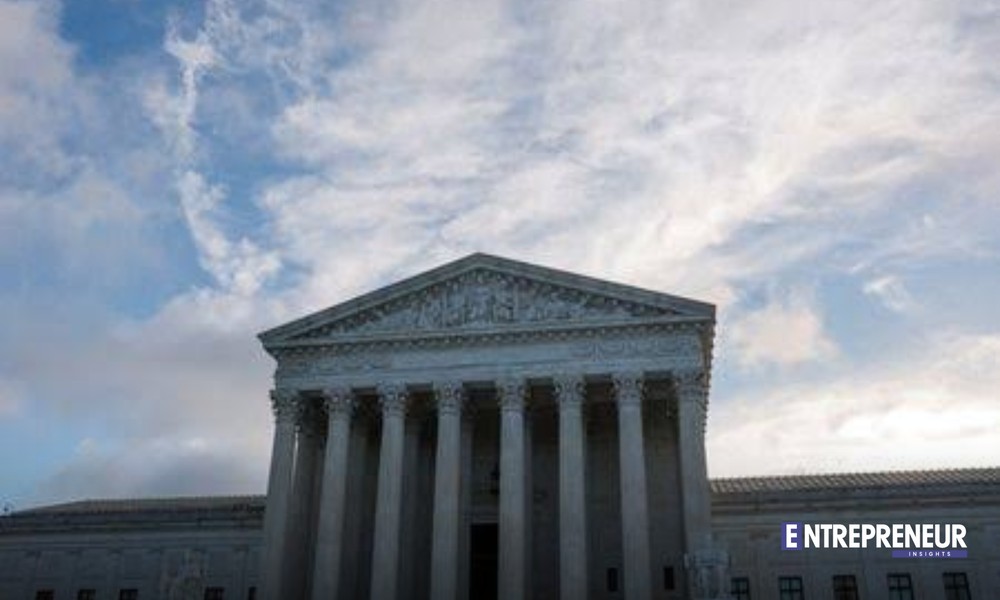
The US Supreme Court has rejected a request for pretrial release by an activist accused of involvement in anti-Immigration and Customs Enforcement (ICE) activities, leaving the legal fight over the activist’s detention unresolved. The decision keeps the case within the ongoing debate over immigration enforcement, protest rights, and the legal standards governing pretrial detention in the United States.
The ruling comes amid wider national discussions about federal immigration policies and the role of the courts in reviewing government actions. However, the decision should be understood within the specific legal circumstances of the case rather than as a broad ruling on anti-ICE protests.
What Did the US Supreme Court Decide?
The US Supreme Court denied the activist’s request for release before trial. Pretrial release allows a person accused of a crime to remain outside custody while court proceedings continue, subject to applicable legal conditions.
A denial of release does not establish that a defendant is guilty. The prosecution must still prove its allegations through the legal process, and the defendant retains the right to challenge the charges.
The precise reasoning behind the Supreme Court’s decision and the legal arguments presented in the application are important to understanding its significance. Those details should be confirmed through the court’s order and reliable reporting before drawing broader conclusions about the case.
How the Decision Relates to US Immigration Enforcement
Immigration and Customs Enforcement is a federal agency responsible for enforcing immigration laws and carrying out certain immigration-related investigations and detention operations.
ICE has become a major focus of public debate, with supporters emphasizing immigration enforcement and critics raising concerns about detention practices, deportations, and the treatment of migrants.
Anti-ICE demonstrations have also raised questions about the distinction between protected political expression and conduct that may violate criminal law. In the United States, peaceful protest and political speech generally receive constitutional protection, although that protection does not extend to every action committed during a demonstration.
The Supreme Court’s decision on pretrial release concerns the legal status of an individual defendant. It should not automatically be interpreted as a decision on the constitutionality of anti-ICE activism as a whole.
Why Pretrial Detention Matters
Pretrial detention is an important issue in the American criminal justice system because defendants are generally presumed innocent until proven guilty.
Courts may consider applicable legal standards when determining whether a defendant should remain in custody while awaiting trial. Depending on the circumstances, these considerations can include the seriousness of the alleged offense, risks associated with release, and the requirements established by federal law.
A request for release can move through different levels of the judicial system, depending on the case and the procedural rules involved. A Supreme Court denial may leave an earlier detention decision in place, but its practical effect depends on the procedural history and the terms of the order.
What Happens Next?
The next steps will depend on the underlying criminal proceedings, any pending motions, and the decisions of the lower courts. The denial of a release request does not necessarily end the case or determine its final outcome.
Observers will be watching for further court filings, hearings, and any developments concerning the activist’s detention and defense.
What the Supreme Court Decision Means for the Case
The US Supreme Court’s rejection of the anti-ICE activist’s pretrial release request highlights the legal questions surrounding detention, due process, and immigration-related protests. The decision does not, by itself, establish guilt or resolve the broader debate over federal immigration enforcement.
As the case continues, its significance will depend on the facts, the legal reasoning applied by the courts, and the outcome of the proceedings.
Read our exclusive interview with Dr. Ramesh Bairi














Leave a comment