
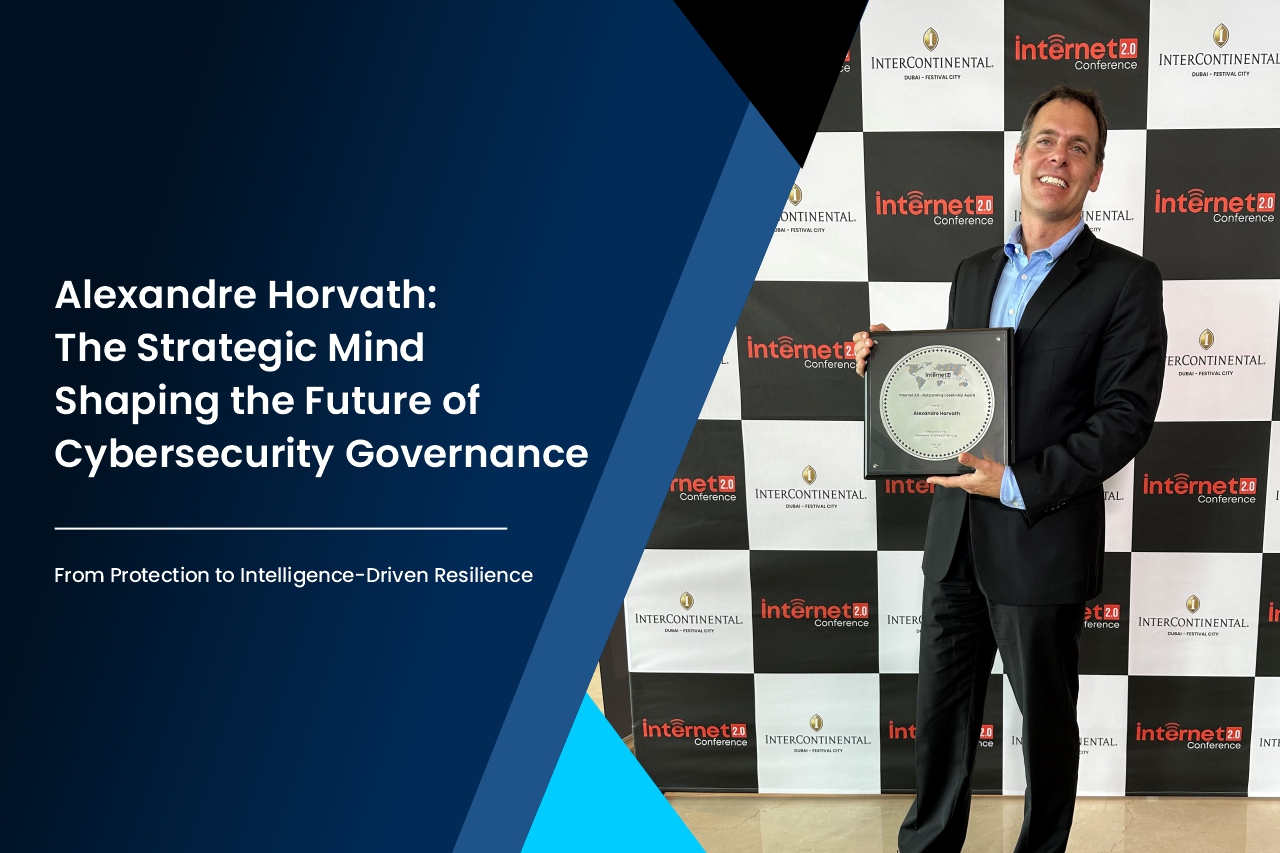
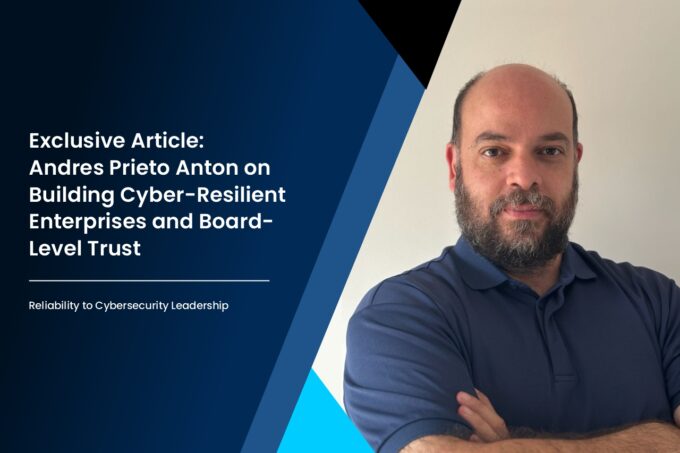
In 2026, the digital world of cybersecurity has progressed far beyond firewalls and incident response. It has become a boardroom requirement, a growth facilitator, and a critical component of corporate resilience. In this special edition of the Top 05 Cybersecurity Thought Leaders and Board Visionaries in 2026, we introduce Alexandre Horvath, Chief Information Security Officer (CISO) & Data Protection Officer (DPO) at Cryptix AG, a leader whose work is transforming how boards, executives, and businesses tackle cyber risk in a hyperconnected future.
Alexandre is recognized not only for his technical expertise but also for his exceptional ability to translate cybersecurity into strategic business language, enabling firms to transition from reactive defense to proactive, intelligence-driven resilience.
From System Failures to Strategic Foresight: The Making of a Cybersecurity Leader
Alexandre’s path to cybersecurity was not coincidental; it was created through intimate experience with institutional failure. Early in his career as an engineer and auditor, he realized a common truth: technology rarely fails on its own. Instead, breaches occur when people, systems, and accountability fall down.
An important incident early in his career—where mismatched coordination caused more damage than the breach itself—became a watershed moment. Leading recovery initiatives under duress, Alexandre discovered that calm leadership, clarity of ownership, and clear communication are frequently more important than tools and dashboards.
We see this formative experience reflected throughout his career. Whether advising boards, leading enterprise risk programs, or navigating complex third-party incidents, Alexandre consistently demonstrates that cybersecurity leadership is as much about human systems as it is about technical controls.
The Future of Cybersecurity: From Protection to Intelligence-Driven Resilience
When we study Alexandre’s future vision, one thread becomes clear: cybersecurity is shifting from reactive defense to proactive resilience.
Over the next three to five years, we believe his insights will define board-level cyber strategy across industries:
AI-Amplified Threats and Defenses
Attackers are weaponizing AI to automate phishing, reconnaissance, exploit development, and social engineering at unprecedented scale. Alexandre emphasizes that defensive capabilities must evolve just as fast, leveraging AI-driven detection, autonomous response, and real-time containment.
Board-Level Accountability and Regulatory Convergence
Cybersecurity, data privacy, and AI governance are converging rapidly under global regulatory frameworks. Alexandre highlights a critical shift: boards will no longer be able to delegate cyber risk blindly. Directors must develop cyber and AI literacy, as accountability increasingly sits at the top.
Resilience as a Measurable Business Metric
Prevention is no longer possible. Alexandre advocates for a future in which resilience is measured in the same way that financial health is via quantifiable KPIs, scenario stress testing, and supply-chain visibility.
In this future, cybersecurity becomes a strategic enabler of trust, innovation, and long-term enterprise value.
Guiding Principles That Define Alexandre Horvath’s Leadership
At the core of Alexandre’s executive and advisory approach are three unshakable principles:
Security Must Enable the Business
Cybersecurity should accelerate innovation—not obstruct it. Alexandre aligns controls with business objectives, ensuring security supports speed to market, digital transformation, and customer confidence.
Transparency and Accountability Are Non-Negotiable
We observe his emphasis on clear ownership, measurable risk, and evidence-based decisions. Boards and executives are given meaningful visibility—without technical noise—into exposure, progress, and trade-offs.
Resilience Over Perfection
Threats evolve faster than roadmaps. Alexandre prioritizes adaptability through automation, intelligence-led defense, continuity planning, and learning cultures that respond decisively when incidents occur.
This philosophy ensures cybersecurity is understood, accepted, and valued across the enterprise.
Transforming Boardroom Conversations Around Cyber Risk
One of Alexandre’s most significant contributions lies in how he has reshaped board-level cyber discussions.
We see his role evolving from technical interpreter to strategic risk partner. Rather than presenting vulnerabilities or threat feeds, Alexandre reframes cybersecurity in terms boards understand instinctively:
- Financial exposure
- Operational disruption
- Regulatory impact
- Brand and trust erosion
Through scenario-based reporting, quantified risk models, and maturity indicators, he enables boards to prioritize cyber risk with the same discipline applied to finance and operations.
The result is a governance model where cybersecurity is no longer an IT concern, it is a core enterprise risk influencing competitiveness and valuation.
Technologies Reshaping Cybersecurity Strategy
Alexandre identifies several transformational forces that are redefining cybersecurity architecture:
AI-Driven and Autonomous Security
Machine learning systems capable of detecting anomalies, correlating signals, and responding in real time are becoming foundational. The shift is from monitoring to predictive, autonomous protection.
Zero-Trust as Architecture
Zero-trust is no longer a project—it is a design principle. Identity-first security and continuous verification are replacing perimeter-based models entirely.
Secure-by-Design Engineering
Regulatory pressure is accelerating the adoption of secure software supply chains, SBOMs, and DevSecOps pipelines with verifiable controls embedded from inception.
Post-Quantum Cryptography Readiness
Forward-looking organizations must prepare today for tomorrow’s cryptographic disruption, positioning post-quantum readiness as a strategic differentiator.
Together, these trends signal a future where security is codified, automated, and inseparable from enterprise architecture.
Turning Crisis into Competitive Advantage
One of the most compelling examples of Alexandre’s leadership was his handling of a large-scale third-party security incident.
Although internal systems remained uncompromised, vendor exposure introduced immediate regulatory, operational, and reputational risk. Alexandre led with clarity framing the incident as a business risk scenario, not a technical failure.
By coordinating legal, communications, operations, and executive leadership, he ensured alignment and avoided reactive decision-making. Transparency with regulators and customers preserved trust, while rapid dependency mapping and compensating controls reduced exposure.
Strategically, the outcome strengthened long-term resilience:
- A tiered third-party risk model was implemented
- Security obligations were embedded into vendor contracts
- Board support accelerated zero-trust and supply-chain security initiatives
We see this as a defining example of crisis leadership that converts risk into strategic maturity.
Building a Cyber-Resilient Organizational Culture
Alexandre’s approach to culture is pragmatic and empowering. He moves cybersecurity away from fear-driven compliance toward shared responsibility and capability building.
Key cultural pillars include:
- Clear role-based ownership
- Experiential learning through simulations and real-world scenarios
- Recognition of proactive risk behavior
- Early integration of security into workflows
- Radical transparency around lessons learned
This model embeds cybersecurity into the business DNA, where teams feel informed, trusted, and accountable.
Redefining Governance for a High-Threat World
In Alexandre’s view, modern boards must take three decisive actions:
- Integrate cyber and operational risk into strategic oversight
- Establish clear accountability and decision rights
- Measure resilience through tested continuity and scenario planning
These actions transform governance from oversight to strategic stewardship.
The Legacy Alexandre Horvath Is Building
As we reflect on Alexandre’s impact, one legacy stands above all: redefining cybersecurity as a strategic enabler of trust and innovation.
His future focus includes advancing AI governance, mentoring the next generation of diverse cyber leaders, and elevating board-level cyber literacy worldwide.
We believe Alexandre represents the future of cybersecurity leadership: calm under pressure, precise in strategy, and relentless in building resilient enterprises.
Read digital edition now on our website









Leave a comment